
Arabic dance and Spanish dance are rich and distinct arts, but they share profound cultural roots intertwined through centuries of Mediterranean history. Though perceived today as separate expressions, their movements, rhythms, and gestures reveal an ancient dialogue between East and West, where the body became a cultural bridge.
The so-called Eastern dance, popularly known as belly dance, was born in the community celebrations of the Arab world as a form of feminine expression linked to fertility, motherhood, and the cycle of life. Its undulating movements, abdominal control, and precision of hips and arms seek not only aesthetic beauty but also to convey emotions and spiritual states. In many regions of the Middle East and North Africa, this dance remains a living part of weddings, festivals, and family gatherings.
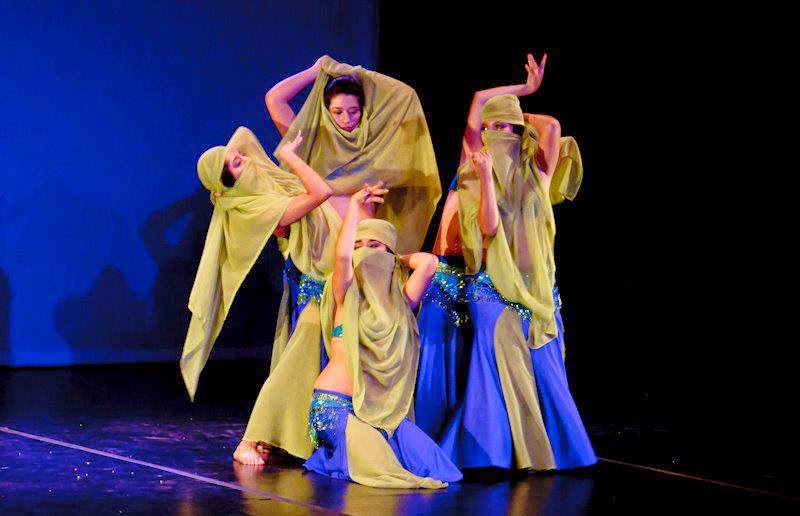
For its part, Spanish dance—especially flamenco—emerged as a cultural synthesis in the south of the Iberian Peninsula. In Andalucia, Gypsy, Jewish, Christian, and Muslim influences converged, giving rise to a deeply emotional form of art. The footwork, elegant arm movements, and expressive use of the hands engage in a bodily language not as distant from the Eastern world as one might think. Both styles use the body as a narrative instrument: one does not dance merely to display technique, but to tell stories of love, pain, celebration, and resistance.
These parallels are not accidental. For centuries, Al-Andalus was a vibrant crossroads of cultural exchange between the Islamic world and Europe. Musicians, poets, and dancers exchanged rhythms, instruments, and forms of expression. The use of Eastern musical scales, rhythmic handclapping, and repetitive patterns resonates in both traditional Arabic music and the soul of flamenco. Even the idea of duende—that raw emotional force essential to flamenco—finds a counterpart in the spiritual dimension many Oriental dances attribute to movement.
Nowadays, this historic connection is being revived. Contemporary dancers blend flamenco with Oriental dance, creating fusion styles that light up international stages. Intercultural festivals and dance schools explore these shared origins, proving that tradition is not static, but a living process of reinterpretation.
Beyond technique, both dance forms share something essential: identity. Whether on a flamenco stage or in an Oriental dance performance, the artist does more than execute steps—they affirm cultural belonging, collective memory, and inherited emotion. Every flick of the wrist, every stamp of the heel, every vibration of the hip carries the weight of centuries.
Thus, when a Spanish dancer and an Arabic dancer meet onstage, it is more than an artistic collaboration—it is a cultural reunion. Two distinct bodily dialects, speaking, at heart, the same language: that of human expression, shared memory, and art as a bridge between civilizations.