
Havana’s International Festival of New Latin American Cinema has opened its 46th edition with a powerful statement, framing this year’s event as a platform not just for film, but for cultural sovereignty and Global South solidarity.
The opening night ceremony at the iconic Chaplin Theatre was charged with purpose, featuring strong expressions of support for Venezuela and, most pointedly, a formal dedication of the festival to the people of Palestine—honoring their steadfast resistance against occupation and ongoing violence. The move cements the festival’s role as a space for cultural defiance against artistic homogenization and a stage for calling out global injustice.
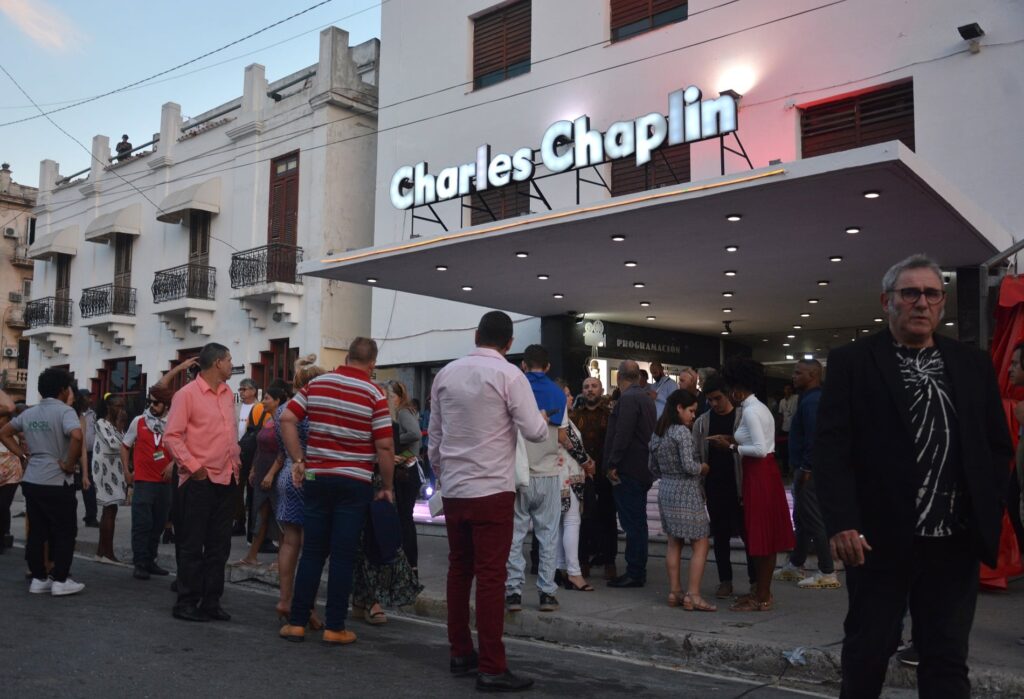
This year also honors the centenary of Alfredo Guevara, founder of Cuba’s film institute ICAIC and a towering figure in bringing Cuban cinema to the world. Guevara’s legacy—rooted in anti-imperialism and a belief in film as an engine for social change—serves as the festival’s guiding spirit, reinforcing the idea that cinema can reflect harsh truths and shape collective consciousness.
The dedication to Palestine sharpens the event’s political edge, positioning it firmly within traditions of international solidarity. By centering this cause, the festival sends a clear message: Latin American cinema doesn’t just document regional struggles—it aligns itself with fights for self-determination, justice, and peace everywhere.
That alignment is reflected directly in the programming. The focus on Palestine has amplified the presence of Arab cinema, with contemporary Palestinian films—exploring life under occupation and in exile—taking a central role. These selections show how film acts as both witness and weapon, preserving memory and sounding an alarm.
This is no sudden shift. The Havana festival has long been a hub for Arab and Middle Eastern film.
- Past editions have screened works by Palestinian directors like Elia Suleiman (Divine Intervention) and Hany Abu-Assad (Paradise Now), whose films grapple directly with liberation and identity.
•Movies from Egypt, Lebanon, and Morocco have regularly featured, tracing themes of migration, resilience, and cultural endurance that resonate deeply with Latin American stories.
•As far back as the 2000s, the festival hosted retrospectives on Syrian and Lebanese cinema, solidifying its place as a crucial meeting ground for Global South filmmakers.
This curated inclusion is intentional. It springs from the festival’s core mission of cross-continental solidarity. If Latin American cinema tells stories of overthrowing dictators and fighting neocolonial power, Arab cinema offers narratives of displacement, siege, and sumud (steadfastness). Together, they form a shared tapestry of resistance.
Ultimately, this year’s focus is a deliberate political and cultural gesture—an acknowledgment that the fights for dignity and sovereignty in Latin America and the Arab world are deeply connected.
More than a film festival, this is a pulsing heart of artistic resistance. It stands as a reminder that in Latin America, art has never been separate from the struggle for identity, justice, and a fairer world.